
Guide to importing structural steelwork
Please note: jactio.com is currently not accepting new sourcing requests. The information on this page remains available.
- 3 March 2020
- Published by: Andreas Janisch
- Category: Procurement
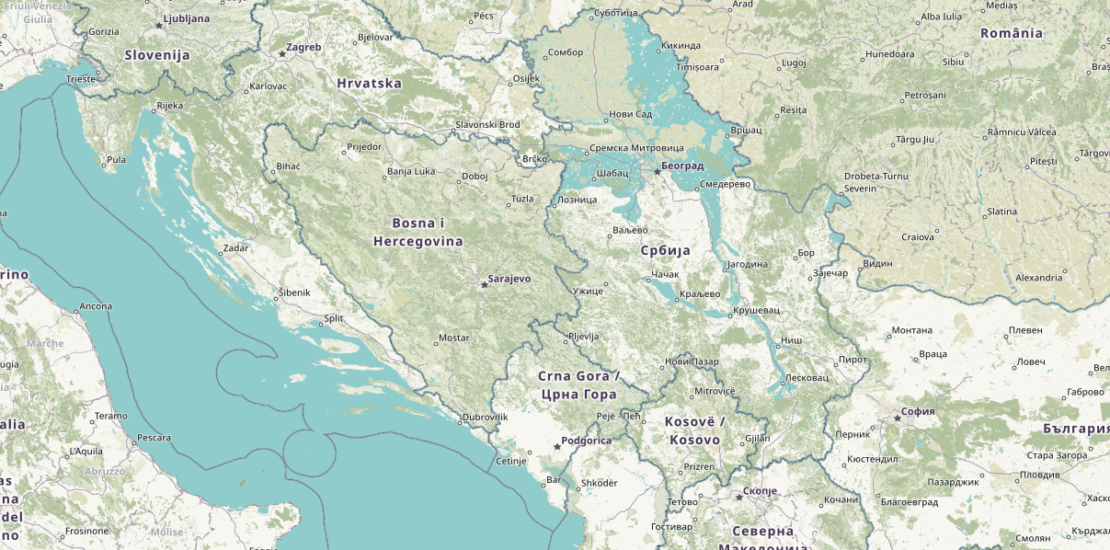
Many small and medium-sized enterprises (SMEs) now procure steel structures from EU countries, mainly from Central and Eastern Europe. Even greater savings can often be achieved by sourcing from non-EU countries such as the Western Balkan states or Turkey. For many companies, however, this step seems too complicated – yet importing is very simple and inexpensive.
In this article, you will learn how importing steel structures from non-EU countries works and what you need to bear in mind.
Contents
- Importing structural steelwork from the Balkan region
- Importing structural steelwork from Turkey
- What are the requirements for importing? Do I need a licence?
- Is customs duty payable on structural steelwork from EUR1 countries?
- How does customs clearance work?
- Use Incoterm DAP or DDP?
- What is import VAT and when is it payable?
- Which delivery term should be agreed?
- How do you find suitable suppliers from the Balkan region or Turkey?
Importing structural steelwork from the Balkan region
For small and medium-sized enterprises, the Balkan region is an attractive region for outsourcing contract manufacturing such as welding or the fabrication of steel structures. We regularly connect contract manufacturers from Serbia, Bosnia and Herzegovina, North Macedonia and Kosovo with customers from Germany, Austria and Switzerland.
Many suppliers from this region are relatively small companies with simple structures. This allows them to respond individually to their customers' wishes and to offer very competitive prices. Compared with suppliers from the EU, the cost of one kg of structural steelwork is up to 0.50 € lower.
Many of these companies have been economically stable for a long time and have built up long-standing relationships with their customers abroad. According to the European Commission, exports to the European Union account for almost three quarters of the region's total trade. Although trade with the region has more than doubled since 2006, it still accounts for less than 1.5% of total EU trade.
What advantages do structural steel suppliers from the Balkan region offer?
- Prices for contract manufacturing or structural steelwork are usually well below the prices achievable in the EU.
- Many companies have long worked for foreign firms, for example from Germany or Austria, and have qualified and certified themselves according to their guidelines.
- Communication in English is usually not a problem. Many companies also employ staff who have previously worked in German-speaking countries and are therefore familiar with the language, culture and quality expectations.
Importing structural steelwork from Turkey
Turkey is one of the largest steel exporters in the world. As a result, Turkish steel construction companies have very good access to raw materials and semi-finished steel products. Steel beams in Turkey currently cost up to 300 € per tonne less than in Germany. Low material costs combined with attractive labour costs strengthen the competitiveness of Turkish steel fabricators.
Turkish suppliers have an advantage especially in structural steelwork and in series production, because the higher transport costs are offset by the volume.
What are the requirements for importing? Do I need a licence?
You do not need a special licence to import steel components. Any company can import goods from non-EU countries. However, an EORI number is required.
The EORI number serves to identify economic operators and is issued by the customs authorities in Germany and Austria.
Applying for an EORI number in Germany:
You can find instructions for applying for an EORI number in Germany here. The application is free of charge. It can take 3–4 weeks for the number to be issued.
Applying for an EORI number in Austria:
You can find instructions for applying for an EORI number in Austria here. This application is also free of charge. It can take up to approx. 10 days for the number to be issued.
Is customs duty payable on structural steelwork from EUR1 countries?
Thanks to a customs agreement with the EU (Stabilisation and Association Agreement), products from these countries with the appropriate certificate of origin are duty-free; however, the VAT due on import and the forwarder's handling costs in the destination country must be borne by the recipient. The VAT due on import is treated in the same way as input VAT.
For invoice amounts up to 6,000 €, a corresponding statement on the supplier's invoice is sufficient, provided the supplier is an approved exporter. The wording must be followed exactly and reads as follows (German version):
Der Ausführer (Ermächtigter Ausführer; Bewilligungs-Nr. ……. [1]) der Waren, auf die sich dieses Handelspapier bezieht, erklärt, dass diese Waren, soweit nicht anders angegeben, präferenzbegünstigte ……. [2]-Ursprungswaren sind.
Or in English:
The exporter of the products covered by this document (customs authorization No … (1)) declares that, except where otherwise clearly indicated, these products are of … (2) preferential origin.
For goods with a value above 6,000 €, a separate EUR.1 certificate is required. Your supplier or its forwarder will apply for it at the competent customs office. Suppliers are usually familiar with this procedure.
How does customs clearance work?
Unlike deliveries from other EU countries, the goods have to cross the EU's external border. Customs clearance takes place there. Although no duty is payable, the formalities still have to be completed.
Your supplier will prepare an export declaration in its country. The import declaration is usually the buyer's responsibility. Some forwarders do offer delivery DDP, often called “free domicile”, but this is time-consuming, involves additional costs and in most cases makes no sense.
The import declaration can be handled by a customs agent. If you do not yet have a customs agent, you can contact your regular forwarder or specialised service providers such as “Die Zollagentur” (Germany) or “AWOR Customs” (Austria). The import declaration involves only low costs. At Die Zollagentur, these amount to 40 € net per customs tariff number. For welded steel structures and similar components, you usually have only one customs tariff number.
The customs agent then tells you which customs office the forwarder should go to for presentation of the goods and prepares the documents for customs clearance.
Use Incoterm DAP or DDP?
The Incoterms DAP and DDP define the responsibilities of buyer and seller for delivery. In the case of DDP (Delivered Duty Paid), the buyer does not have to take care of anything else. This sounds good at first, but it brings a major cost disadvantage: with DDP, the seller has to pay the import VAT in the destination country and usually has no way of getting it back. The seller therefore has to include the import VAT in the product price.
If, on the other hand, the delivery term DAP is used, the buyer pays the import VAT and has it credited as input VAT.
When does DDP make sense?
For the reasons given above, the delivery term DAP is generally preferable. In some cases, however, it can make sense to use DDP:
- when selling to private customers (because they cannot claim input VAT deduction anyway)
- for goods of low value (e.g. sample deliveries)
- for deliveries within a group of companies (e.g. a subsidiary abroad)
What is import VAT and when is it payable?
When goods are imported into the EU, the importer has to pay import VAT. It is equal in amount to normal VAT and is treated in the same way. As a business buyer, you can reclaim this import VAT as input VAT. So no additional taxes are incurred compared with buying in Germany. A forwarder, however, cannot deduct input VAT, which is why the buyer should always make the import declaration.
Import VAT is usually paid without cash, i.e. it is debited to your tax account, where it is then claimed back as input VAT.
Which delivery term should be agreed?
For practical reasons (language, fees), it is advisable to choose an Incoterm under which the seller makes the export declaration and the buyer makes the import declaration. These range, for example, from FCA (buyer organises transport) to DAP (seller organises transport).
Popular terms such as “free domicile” or “ex works” are not recommended for the following reasons:
- “Free domicile” does not define exactly what obligations buyer and seller have. This term should therefore not be used in international trade; instead, a term from Incoterms 2020 (e.g. DAP) should be agreed. Buyers often interpret “free domicile” as DDP (Delivered Duty Paid – goods are delivered cleared through customs). Suppliers often understand it as DAP (Delivered at Place – goods are transported by the seller but not cleared through customs).
- EXW (Ex Works) is an unfavourable delivery term for the case described, because the buyer not only has to prepare the export documents but also has to load the goods onto the truck. In practice, however, loading is done by the supplier, as it has the necessary equipment (forklift, crane, lifting gear, staff) on site. For these reasons, FCA should always be chosen instead of EXW.
How do you find suitable suppliers from the Balkan region or Turkey?
If you would like to establish supplier relationships with countries in the Balkan region or Turkey, feel free to contact us by email or phone. If you have a specific enquiry, please use our enquiry form. We will be happy to find suitable suppliers for you free of charge and without obligation and support you in placing the order.
Last revised on 15 December 2022 by Andreas Janisch