
Metalwork or structural steelwork – what is the difference?
- 23 November 2022
- Published by: Andreas Janisch
- Category: Procurement
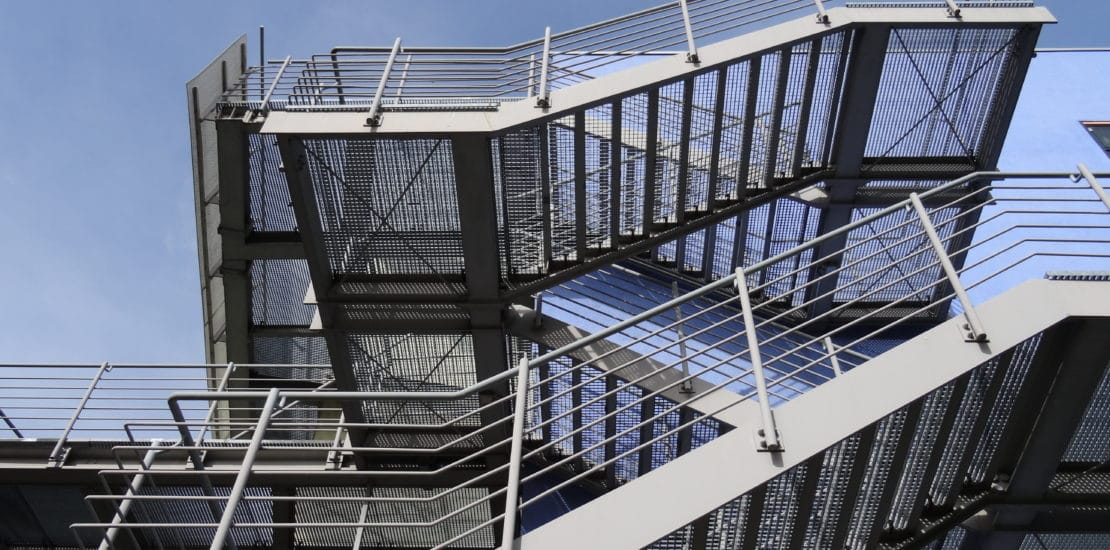
The terms metalwork and structural steelwork are often confused. For most people outside the industry, the difference is hard to see anyway.
There are also regional differences, because the terms have different origins in Germany, Austria and Switzerland.
Different industries also use the term structural steelwork in different ways.
How the construction industry distinguishes between structural steelwork and metalwork
In the construction industry, the prevailing view is that structural steelwork mainly covers load-bearing structures. Metalwork, by contrast, refers to components with no or only a minor load-bearing function. This is best illustrated by a commercial steel hall:
The steel fabricator supplies the basic frame of the hall. As a rule, this consists of heavy steel beams.
Metalworkers then mount facade panels, doors, windows and stairs on this basic frame.
Stricter rules for steel fabricators
Steel fabricators who erect load-bearing structures must be certified to EN 1090. Depending on the certification, different load-bearing structures may be erected. Metalworkers who do not erect load-bearing structures do not need this certification.
Can a metalworker build stairs and railings without EN 1090 certification?
The situation for stairs and railings is somewhat unclear. In the following cases, certification to EN 1090 is required for stairs and railings:
- If the components contribute to the stability of the building
- If it is a stand-alone structure
- If they serve as escape routes in the event of fire
See also: https://www.metallbau-magazin.de/artikel/mb_Nach_vier_Jahren_EN_1090_3372437.html
The certification rules for stairs and railings were recently revised. We accept no liability for this information. Please check with the competent chamber or trade guild.
Structural steelwork for mechanical engineering
In mechanical engineering, structural steelwork usually means welded components made of structural steel, which are considerably more detailed than in the construction industry. On the one hand, the term is used for load-bearing structures such as platforms and maintenance platforms; colloquially, however, it also includes heavy machine parts, housings and frames. A key difference from structural steelwork in construction is the much tighter dimensional tolerances.
Your contact person
-

Andreas Janisch
FounderAndreas Janisch, founder of Jactio.com, is an industrial engineer with more than 15 years of experience in mechanical engineering, plant construction and construction....
View profile
Last revised on 9 December 2022 by Andreas Janisch